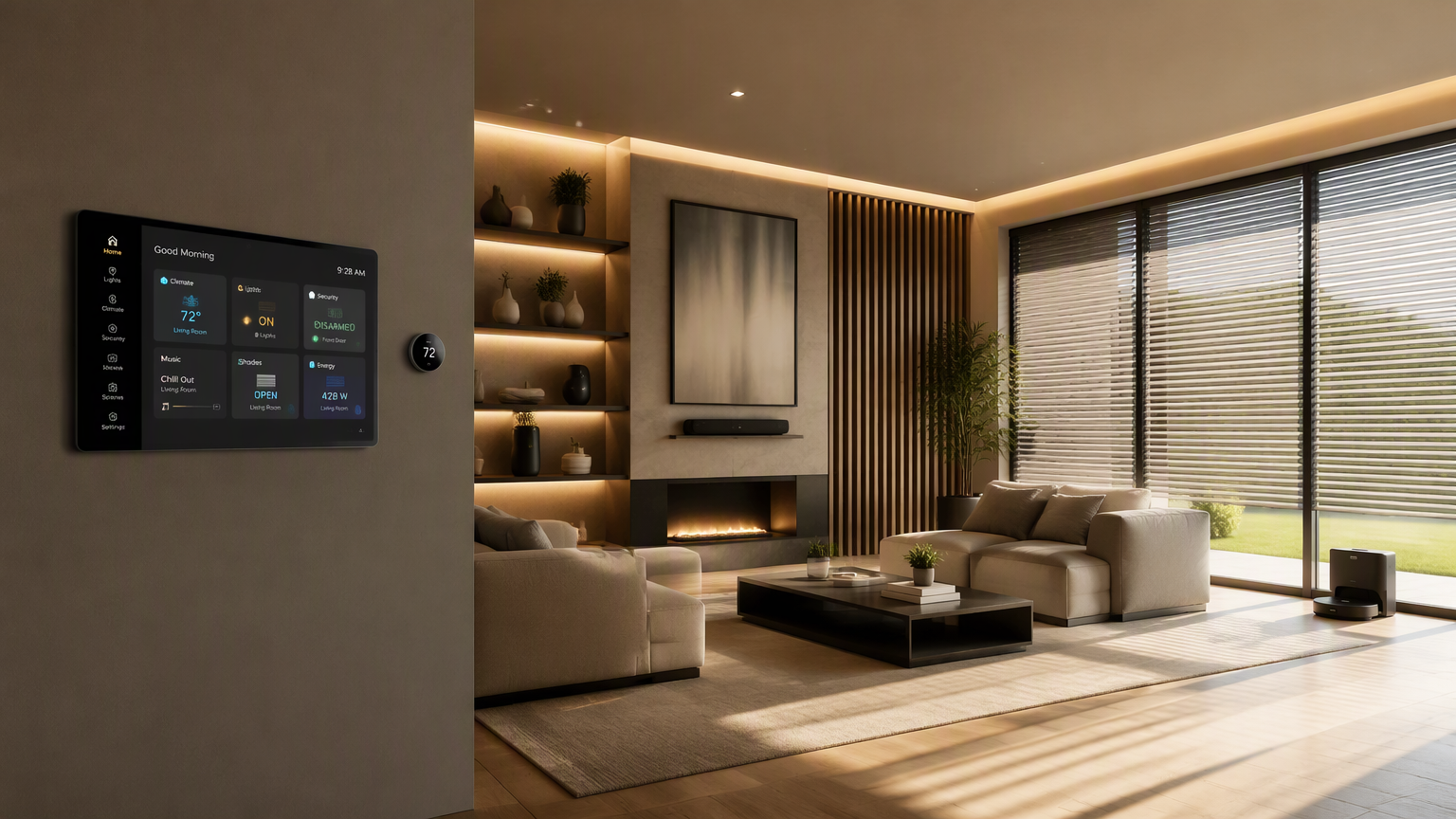
The smart home of 2024 isn't a Jetsons fantasy—it's a messy, magnificent reality. Your lights sync with circadian rhythms. Your thermostat negotiates energy rates with the grid. Your doorbell recognizes the UPS driver and unlocks the porch box. But here's the catch: most homes are a Frankenstein of incompatible gadgets, abandoned hubs, and automations that trigger at 3 AM because a cat walked past a motion sensor.
The Protocol War Is Over. Matter Won.
For years, Zigbee, Z-Wave, Thread, and Wi-Fi fought a trench war in your walls. Matter 1.3 (released late 2023) effectively ended it. Backed by Apple, Google, Amazon, Samsung, and the Connectivity Standards Alliance, Matter runs over Thread and Wi-Fi/Ethernet with Bluetooth for commissioning. The practical upshot: buy a device with the Matter logo, scan a QR code, and it works in HomeKit, Google Home, Alexa, and SmartThings simultaneously. No more checking compatibility matrices before purchasing a $30 smart plug.
💡
TipIf you're starting fresh, buy Thread border routers first (HomePod mini, Nest Hub 2nd gen, Echo 4th gen, SmartThings Station). They form the backbone for low-latency, mesh-based Matter devices.
Architecture: Local First, Cloud Optional
The smartest homes in 2024 process logic locally. Home Assistant (running on a Raspberry Pi 5, Intel NUC, or repurposed mini PC) has become the de facto brain for enthusiasts. It integrates 2,500+ devices, runs automations without internet, and exposes a local dashboard. For mainstream users, Apple HomeKit and Samsung SmartThings now execute most routines on-hub. The rule: if your lights can't turn on when Comcast goes down, your architecture is wrong.
Device Categories That Matter Now
| Category | 2024 Standard | Skip If |
|---|---|---|
| Smart Lighting | Matter over Thread (Nanoleaf, Eve, Govee) | Wi-Fi only bulbs without Thread border router |
| Thermostats | Matter + local scheduling (Ecobee, Honeywell Home, Google Nest) | Cloud-dependent models with no local API |
| Locks | Thread + Matter (Yale Assure 2, Schlage Encode Plus, Level Lock+) | Z-Wave only unless you have dedicated hub |
| Sensors | Thread PIR/temp/humidity (Eve, Aqara, Third Reality) | Battery life under 18 months |
| Cameras | Local AI person/vehicle detection (Reolink, Eufy, Frigate+NVR) | Cloud-only recording with subscription |
"The best smart home device is the one you forget exists. It just works—until you need to change something, then it's one tap away.
— Bradley Chambers, HomeKit News
Security: The Boring Stuff That Matters
IoT devices are the soft underbelly of home networks. Three non-negotiables: VLAN segregation (IoT on its own subnet, no access to main LAN), DNS filtering (NextDNS or Pi-hole blocking telemetry), and certificate-based authentication for remote access (Tailscale or Cloudflare Tunnel—never port forwarding). Disable UPnP. Block outbound traffic by default. Monitor with Home Assistant's network integration or Fingbox.
⚠️
WarningCheap Tuya/Generic Wi-Fi devices often phone home to Chinese servers. Flash ESPHome or Tasmota, or isolate them on a VLAN with no internet access.
Automation Philosophy: Modes Over Scenes
Stop building brittle scenes ("Movie Night: lights 20%, TV on, blinds down"). Build modes: Home, Away, Sleep, Guest, Holiday. Each mode defines default states for every device. Automations transition between modes based on presence, time, alarms, or explicit triggers. A "Sleep" mode handles bedtime, 3 AM bathroom trips (dim path lights), and wake-up (gradual brightening). One mode rule replaces twenty scene automations.
✦
Your 2024 Starter Stack
Week 1: Home Assistant Green ($99) or Raspberry Pi 5 + SSD. Add SkyConnect dongle for Thread/Zigbee. Week 2: Matter-enabled Thread devices—two Eve Energy plugs, two Aqara P1 motion sensors, one Eve Weather. Week 3: Replace one switch with a Matter smart switch (Leviton Decora Smart or GE Cync). Week 4: Add a local camera (Reolink E1 Outdoor) with Frigate for person detection. Total: ~$600. No subscriptions. Full local control. Expand from there.
ℹ️
NoteMatter device support in Home Assistant requires the "Matter" integration (beta) and a Thread border router. Enable "Thread" in Settings → Devices & Services.
The connected home isn't about gadgets. It's about reducing friction—lights that know when you're home, climate that anticipates your schedule, security that watches without watching you. Start with the backbone. Choose Matter. Keep it local. Automate modes, not moments. Your house should feel smarter, not just full of smart things.