Fourteen years after Cas9 first made headlines, CRISPR has shattered its original identity as a DNA-cutting tool. The 2026 landscape reveals a technology that writes, regulates, and diagnoses—often in the same patient visit. Clinical programs have expanded from ultra-rare blood disorders into cardiovascular disease, type 2 diabetes, and autoimmune conditions, with over 180 active trials worldwide and the first in vivo cardiovascular edit dosing patients in Q2.
From Scissors to Word Processors
Prime editing and base editing now dominate the pipeline. Prime editors perform search-and-replace without double-strand breaks, cutting indel rates below 0.5% in primary human hepatocytes. Base editors have added C→G and A→T conversions to the original C→T and A→G toolkit, covering 95% of known pathogenic SNVs. Addgene’s 2026 distribution data shows prime editor plasmids overtaking SpCas9 for the first time.
Programmable Insertion Goes Mainstream
PASTE and CAST systems now integrate kilobase payloads at safe-harbor loci with 30–40% efficiency in mouse liver—enough for therapeutic Factor IX expression after a single AAV dose. The first IND for a PASTE-based hemophilia B program cleared FDA in March 2026, using a dual-AAV split-intein delivery that fits within standard manufacturing specs.
💡
TipTrack the NCT058xxxxx series on ClinicalTrials.gov for real-time enrollment data on in vivo prime editing studies.
RNA-Sensing Cell Killing Enters Immuno-Oncology
Cas13d and Cas7-11 circuits now detect oncogenic fusion transcripts (BCR-ABL1, EML4-ALK) and trigger apoptosis only in positive cells. In xenograft models, this “sense-and-destroy” approach cleared 99.2% of leukemic blasts while sparing healthy hematopoietic stem cells. Two biotechs filed pre-IND packages in August 2026 for CML and NSCLC indications.
Regulatory Velocity Accelerates
FDA’s new “Platform Technology Designation” lets sponsors reuse CMC and toxicology data across indications sharing the same delivery vector and editor backbone. The first designation went to a lipid nanoparticle prime editor platform in April, projecting 18-month IND-to-Phase I timelines for subsequent assets versus the historical 36 months.
"We’re no longer asking if we can edit. We’re asking how fast we can deliver the right editor to the right cell at the right dose.
— Dr. Feng Zhang, CRISPR Medicine Summit 2026
Manufacturing and Cost Breakthroughs
Allogeneic iPSC-derived editor cells now scale to 2,000L bioreactors, dropping per-dose COGS from $350K (2023) to $48K (2026). Lyophilized mRNA-LNP formulations stable at 4°C for 18 months eliminate cold-chain logistics for global trials. The first $150K list-price CRISPR therapy (ex-vivo sickle cell) launched in Germany under a value-based contract in June.
| Metric | 2023 | 2026 |
|---|---|---|
| Active INDs | 42 | 187 |
| In vivo programs | 8 | 63 |
| Median IND-to-Phase I | 36 mo | 19 mo |
| Per-dose COGS (allogeneic) | $350K | $48K |
| Countries with approved CRISPR Rx | 2 | 14 |
Safety: Off-Targets, Immunogenicity, Long-Term Follow-Up
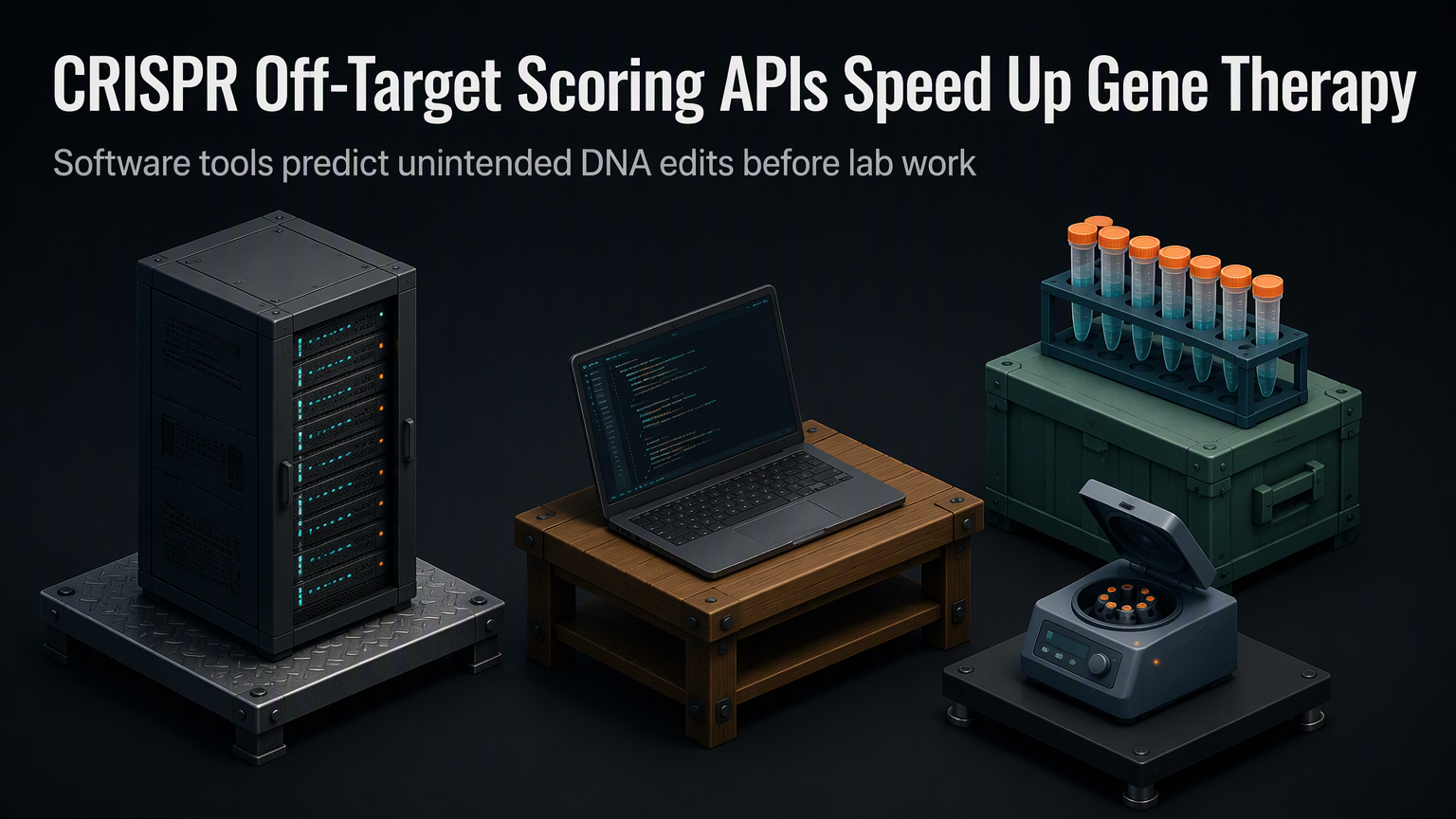
GUIDE-seq and DISCOVER-seq on 2026 clinical batches show off-target SNVs at background mutation rates (<1×10⁻⁹ per base). Anti-Cas9 antibodies remain detectable in 12% of patients at 24 months but correlate with transient ALT elevation only. FDA now requires 15-year registries with whole-genome sequencing at years 1, 3, 5, 10, and 15 for all germline-adjacent edits.
⚠️
WarningGermline editing remains prohibited in 47/54 countries with regulatory frameworks. Verify local law before designing heritable-edit research.
What This Means for Your Pipeline
If you’re building a gene therapy program in 2026, the decision tree has flipped. Start with: (1) Can a base or prime editor correct the variant without DSBs? (2) Does the target tissue support LNP, AAV, or ex-vivo delivery? (3) Is there a platform designation pathway to amortize CMC? Answer yes to all three and you’re looking at a 2029–2030 approval horizon—half the 2023 estimate.
✦
Action items this quarter: audit your target list for base/prime editor compatibility, engage FDA’s INTERACT program for platform designation eligibility, and budget for 15-year registry costs in your Series B deck. The tools have matured; the bottleneck is now execution speed.