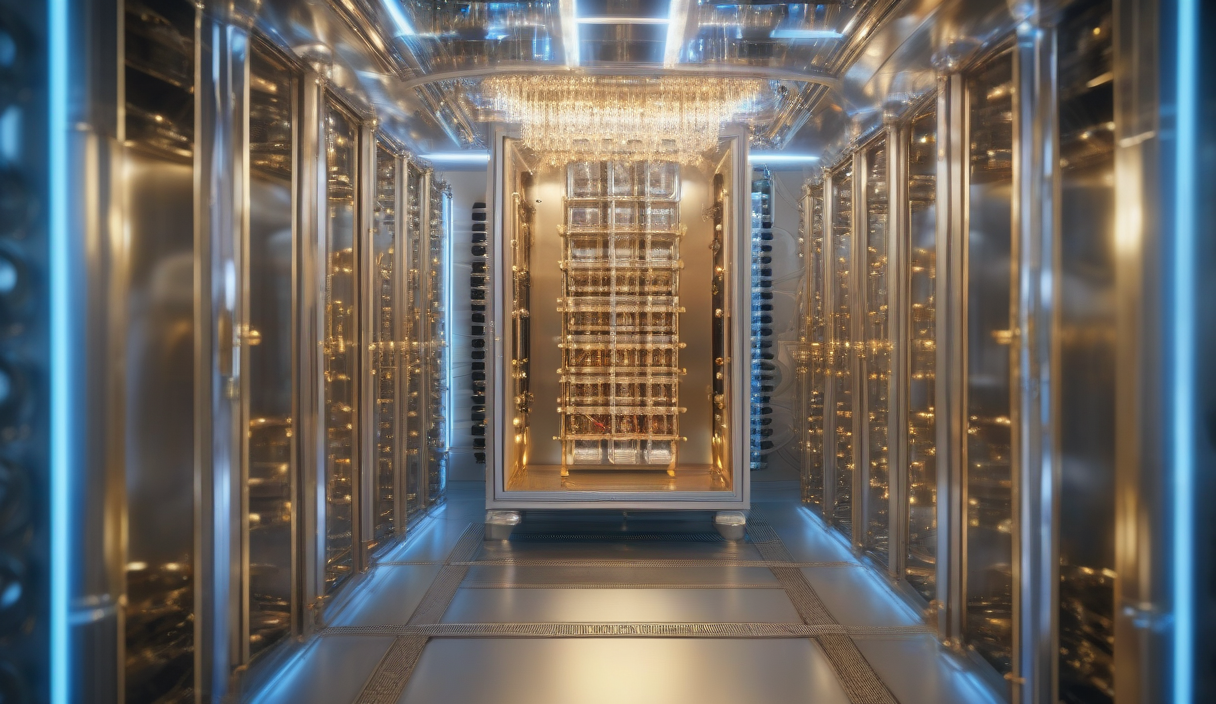
IBM just hit 100,000 circuits per second on a 120-qubit processor. That's not a typo. It's a 25x throughput jump over their Heron architecture, and it happened in August 2026. The quantum winter everyone predicted? It's thawing faster than the models suggested.
Where We Stand: Nighthawk r2
The Nighthawk r2 processor represents IBM's current production hardware. 120 qubits sounds modest next to the 1,000+ qubit claims from 2023, but qubit count stopped being the right metric two years ago. What matters: circuit depth, gate fidelity, and throughput. Nighthawk delivers accurate results on circuits with 7,500+ gates. That's the difference between running a toy algorithm and executing a workload that classical hardware struggles to verify.
The 2029 Target: Starling
IBM's stated goal for 2029 is Starling: roughly 200 logical qubits capable of running 100 million gates. Note the word "logical." That means error-corrected qubits, each composed of multiple physical qubits. If they hit this, we're looking at the first genuinely fault-tolerant quantum computer. Not NISQ. Not "quantum advantage" on a contrived benchmark. A machine that runs Shor's algorithm, quantum chemistry simulations, and optimization problems at scales that matter commercially.
ℹ️
NoteLogical qubits require overhead. Surface code architectures typically need 10-100 physical qubits per logical qubit. Starling's 200 logical qubits could mean 2,000-20,000 physical qubits.
Profiling Tools Are the Unsung Hero
Hardware grabs headlines. Tooling determines adoption. IBM's 2026 roadmap emphasizes new profiling tools for monitoring, verifying, and debugging workloads across quantum and classical resources. This is where the rubber meets the road for developers. You can't optimize what you can't measure, and hybrid quantum-classical workflows are notoriously opaque. Expect dashboards that show circuit execution metrics, error rates per gate type, and classical pre/post-processing bottlenecks in a single view.
What This Means for Your Roadmap
If you're evaluating quantum for production workloads, the timeline has compressed. The gap between "interesting research" and "production viable" is narrowing to 3-4 years for specific problem classes: materials discovery, financial risk modeling, and logistics optimization. Start by identifying problems in your domain that map to quantum algorithms (VQE, QAOA, quantum machine learning). Build classical benchmarks now. When Starling-class hardware arrives, you'll need validated problem formulations, not exploratory science projects.
The Competitive Landscape
IBM isn't alone. Google's Willow processor demonstrated error correction below the surface code threshold. Quantinuum's H2 hit 56 qubits with industry-leading fidelity. PsiQuantum targets a million-photon photonic system. The difference: IBM publishes a dated roadmap with specific throughput numbers and delivers on them. Nighthawk's 100k circuits/second isn't a projection — it's a measured result. That credibility matters when you're budgeting for 2027-2028 integration work.
"The era of quantum supremacy demonstrations is over. The era of quantum utility has begun.
— Jay Gambetta, IBM Fellow
Action Items for Q4 2026
1. Audit your computational bottlenecks. Which problems scale exponentially with classical resources? 2. Assign one engineer to learn Qiskit or Cirq at the circuit level — not just high-level SDKs. 3. Establish a quantum readiness budget: 5-10% of R&D for algorithm development and classical benchmarking. 4. Engage with IBM Quantum Network or equivalent for cloud access to Nighthawk-class hardware. The learning curve is steeper than AI/ML was in 2018, but the competitive moat for early movers is deeper.
✦
💡
TipBookmark IBM's quantum roadmap page. They update it quarterly with measured performance data, not marketing projections.