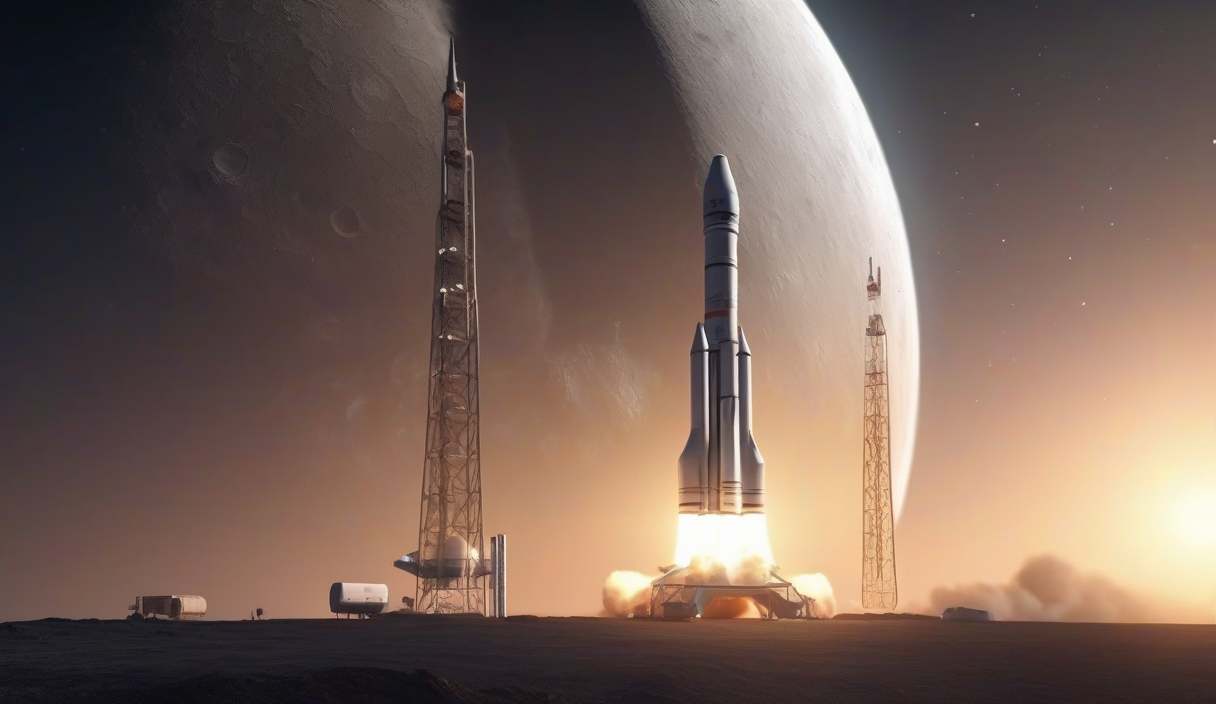
Picture a highway where gas stations orbit Earth at 17,500 mph. That's not sci-fi—it's the infrastructure taking shape in 2026. While headlines chase Mars timelines, the real revolution is happening in low Earth orbit: spacecraft that refuel, satellites that build themselves, and propulsion that laughs at chemical limits.
Orbital Refueling Goes Operational
SpaceX's Starship tanker demonstrations and NASA's OSAM-1 mission aren't experiments anymore—they're the first gas pumps on the orbital highway. In 2026, we'll see the first commercial satellite refueled in GEO, extending a $300M asset's life by five years. The economics flip instantly: launch mass constraints evaporate when you can top off after reaching orbit. Northrop Grumman's Mission Extension Vehicle already proved the model; now the pump network expands.
ℹ️
NoteRefueling in orbit decouples launch mass from mission capability. A 5-ton satellite launched on a medium rocket can become a 15-ton capability after orbital top-off.
Nuclear Thermal Propulsion: The Mars Transit Game-Changer
NASA's DRACO program flies a nuclear thermal rocket demonstrator in 2026. Twice the specific impulse of chemical engines means Mars in 3-4 months instead of 7-9. That's not incremental—it rewrites crew radiation exposure, consumables mass, and launch window flexibility. The reactor uses high-assay low-enriched uranium (HALEU), avoiding weapons-grade proliferation concerns while delivering 25 MW of thermal power.
Orbital Manufacturing: Factories Without Gravity
Varda Space and Space Forge move from tech demos to production runs. ZBLAN optical fiber—100x lower signal loss than silica—crystallizes perfectly in microgravity. Semiconductor substrates, pharmaceuticals, and exotic alloys follow. The 2026 milestone: first commercial kilowatt-hour of orbital manufacturing revenue. Reentry capsules become product delivery vehicles, not just crew returns.
| Material | Earth Defect Rate | Orbit Defect Rate | Value/kg |
|---|---|---|---|
| ZBLAN Fiber | ~40% | <2% | $3M |
| GaN Wafers | ~15% | <1% | $500k |
| Protein Crystals | ~60% | <5% | $10M+ |
Lunar Surface Power: The Kilowatt Becomes Megawatt
NASA's Fission Surface Power project delivers a 40 kWe reactor demo to the Moon's south pole. It's modest compared to terrestrial plants, but it's the first nuclear fission system on another world. Paired with vertical solar arrays that track the Sun at 89° incidence angles, Artemis Base Camp gets continuous power through 14-day lunar nights. This unlocks ISRU—ice mining, oxygen extraction, metal production—at industrial scale.
"The Moon isn't a destination. It's a logistics hub. Power density determines whether we visit or stay.
— Dr. John Thornton, Astrobotic CEO
AI-Native Satellite Constellations
Starlink v2 and Project Kuiper satellites now run onboard ML inference for collision avoidance, beam forming, and traffic routing—no ground-in-the-loop latency. In 2026, constellations become autonomous swarms: they negotiate spectrum, dodge debris, and rebalance capacity in milliseconds. The network becomes its own air traffic control. This scales to 100,000+ active satellites without proportional ground ops growth.
💡
TipWatch for "software-defined satellites" where payload function changes via upload—comms today, radar tomorrow, SIGINT next week.
Radiation Shielding That Isn't Lead
Hydrogen-rich polymers, boron nitride nanotubes, and water-wall architectures replace mass-heavy aluminum. The 2026 breakthrough: multifunctional shielding that's also structure, thermal management, and micrometeoroid protection. NASA's HERA habitat tests show 40% mass reduction for equivalent GCR protection. For crewed Mars transit, that's 15+ tons saved—a whole extra launch.
✦
What This Means for Your Roadmap
If you're building space hardware in 2026, design for refueling ports. Standardize on the NASA Docking System or SpaceX's QD interface. Budget for nuclear-qualified electronics if your mission leaves LEO. Prototype payloads for microgravity manufacturing—the first movers capture the high-margin materials. And treat radiation hardening as a system architecture problem, not a component selection checkbox.
⚠️
WarningThe orbital economy rewards standardization. Proprietary interfaces become technical debt the moment a competitor offers a compatible tanker.