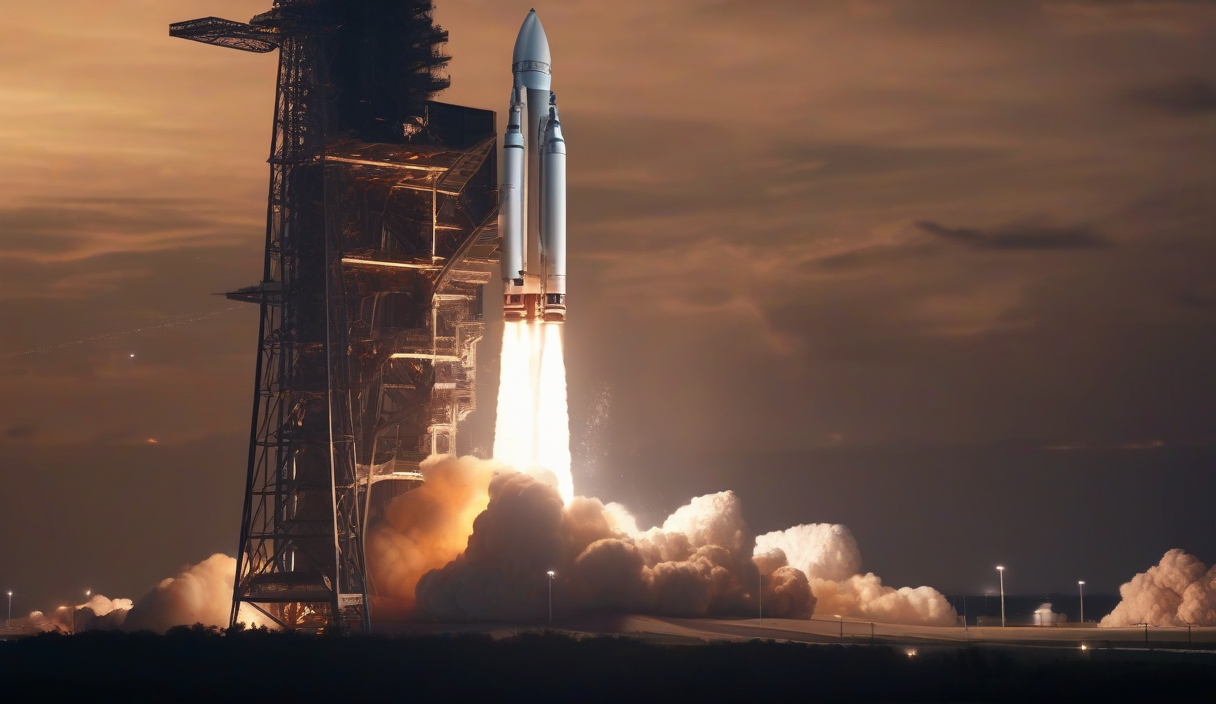
Fifty years after the last Apollo astronaut left footprints in lunar dust, NASA is poised to go back. But this time, the playbook has been ripped up. The Artemis program, once a linear march toward a 2024 landing, has undergone its most radical restructuring yet. In February 2026, NASA officially shifted the first crewed landing from Artemis III to Artemis IV, inserted a new mission into the manifest, and standardized the Space Launch System (SLS) configuration. The message is clear: the agency is trading speed for sustainability.
The New Mission Sequence
The revised manifest adds a critical stepping stone. Artemis II, targeting April 2026, will send four astronauts on a lunar flyby — the farthest humans have traveled since 1972. Artemis III, previously the landing mission, becomes a dedicated Orion and Starship docking demonstration in Near-Rectilinear Halo Orbit (NRHO). Artemis IV, now slated for 2028, carries the honor of the first surface touchdown since Apollo 17, delivering crew to the lunar South Pole via the Gateway station.
| Mission | Target | Primary Objective |
|---|---|---|
| Artemis II | April 2026 | Crewed lunar flyby, Orion systems verification |
| Artemis III | 2027 | Orion-Starship docking demo in NRHO |
| Artemis IV | 2028 | First crewed lunar landing (South Pole), Gateway delivery |
| Artemis V | 2029 | Second landing, Lunar Terrain Vehicle delivery |
Why the Pivot?
Two technical dragons drove the rewrite. First, the Orion heat shield. Post-flight analysis of Artemis I (2022) revealed unexpected char loss and cracking during skip-entry reentry. NASA needs Artemis II to validate the fix before committing a crew to a landing profile with no abort-to-Earth option. Second, Starship Human Landing System (HLS) maturity. SpaceX must demonstrate orbital refueling, cryogenic propellant management, and an uncrewed lunar landing — milestones that slipped right. Moving the landing to Artemis IV buys margin for both vehicles.
"We are not repeating Apollo. We are building infrastructure for a sustained presence. That requires getting the systems right, not just getting there fast.
— NASA Associate Administrator Jim Free, February 2026 briefing
SLS Standardization: Block 1B Becomes the Workhorse
NASA also confirmed the SLS Block 1B — featuring the Exploration Upper Stage (EUS) — as the standard configuration starting with Artemis IV. This eliminates the Block 1 to 1B transition risk mid-program. Block 1B lifts 42 metric tons to trans-lunar injection (TLI), enough for co-manifested payloads like the I-HAB Gateway module. The trade-off: Artemis II and III fly on the interim Block 1, requiring a separate mobile launcher (ML-2) for Block 1B that is still under construction.
ℹ️
NoteBlock 1B EUS enables single-launch delivery of Orion plus 10+ ton co-manifested payloads, critical for Gateway assembly.
Artemis II: The High-Stakes Dress Rehearsal
April 2026 is the linchpin. Commander Reid Wiseman, Pilot Victor Glover, Mission Specialist Christina Koch, and CSA astronaut Jeremy Hansen will ride Block 1 to a free-return trajectory around the Moon. No landing, no Gateway, no Starship. Just Orion, the European Service Module, and 10 days of deep-space operations. They will test life support, communications, navigation, and the revised heat shield at lunar-return velocities (11 km/s). Success here unlocks the entire manifest.
The Starship Factor
SpaceX's Starship HLS remains the critical path. The Option A contract requires an uncrewed demo landing before Artemis IV. That means SpaceX must nail: orbital propellant transfer (multiple tanker flights), long-duration cryo-coast, precision lunar descent, and ascent. NASA has insight clauses and milestone payments, but schedule control sits with SpaceX. The new Artemis III docking demo de-risks the Orion-Starship interface early, but the landing itself stays on the Starship critical path.
⚠️
WarningIf Starship uncrewed demo slips past 2027, Artemis IV landing slides. No margin remains in the manifest.
What to Watch Next
The next 18 months decide the decade. Track these milestones: Orion heat shield qualification test results (late 2025), SLS Core Stage-2 delivery to KSC, Starship orbital refueling demo (SpaceX target: 2025), and Mobile Launcher-2 readiness for Block 1B. Artemis II is not a spectacle — it is a systems verification flight. If it flies clean, the architecture holds. If not, expect another restructure.
✦
💡
TipFollow NASA's Artemis blog and SpaceX Starship updates for real-time milestone tracking. The launch window for Artemis II opens April 2026 — bookmark the NASA TV schedule now.