The July 2026 CVE weekend changed everything. Four hundred thirty-two vulnerabilities in a single weekend. Eighty percent traced to memory safety bugs that C and C++ simply cannot prevent at the language level. Linux 7.0 shipped with Rust in the kernel permanently. NVIDIA and Asahi are shipping production drivers written in Rust. Greg Kroah-Hartman has publicly backed the transition. The industry verdict is no longer theoretical.
What the Borrow Checker Actually Buys You
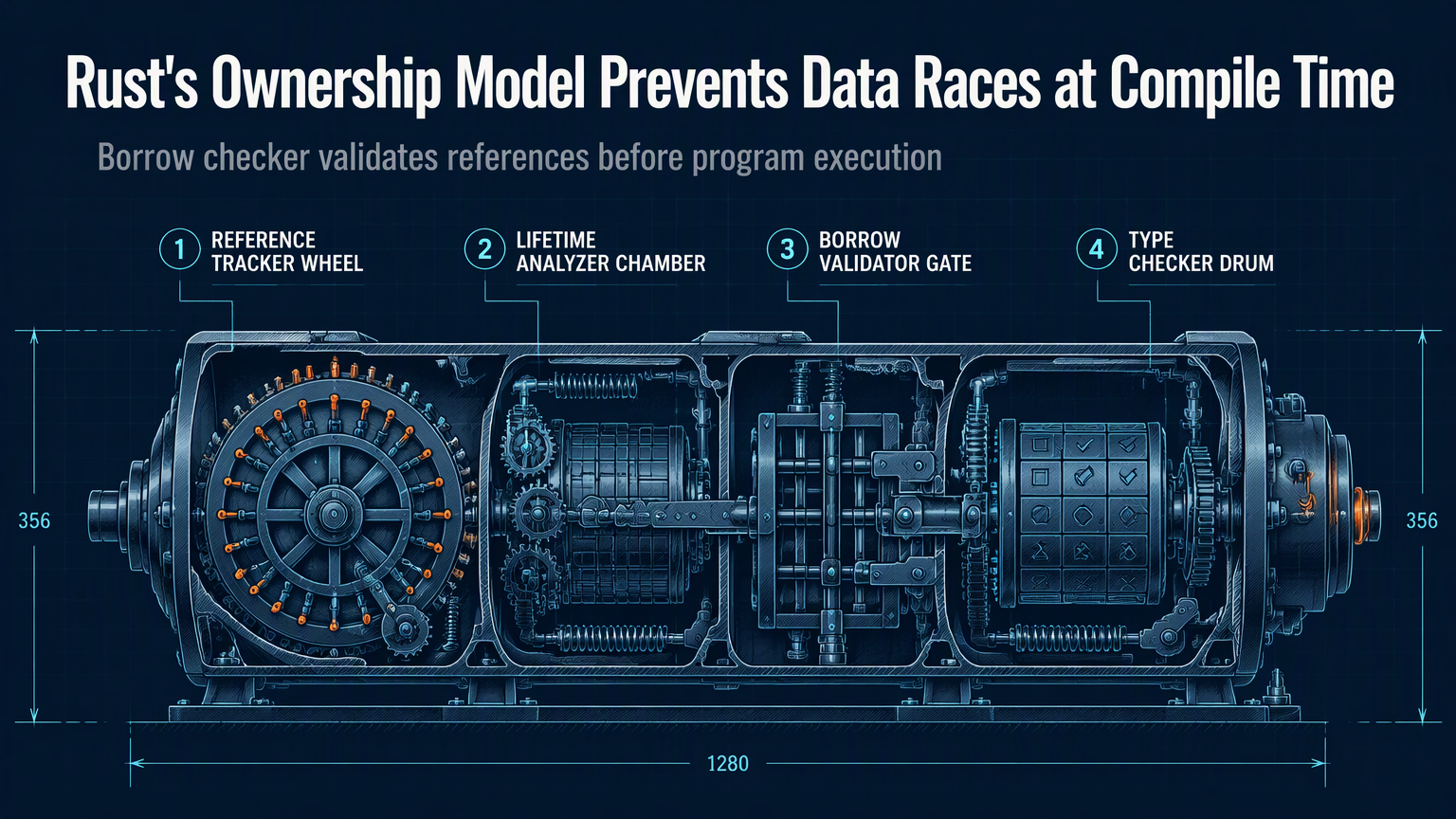
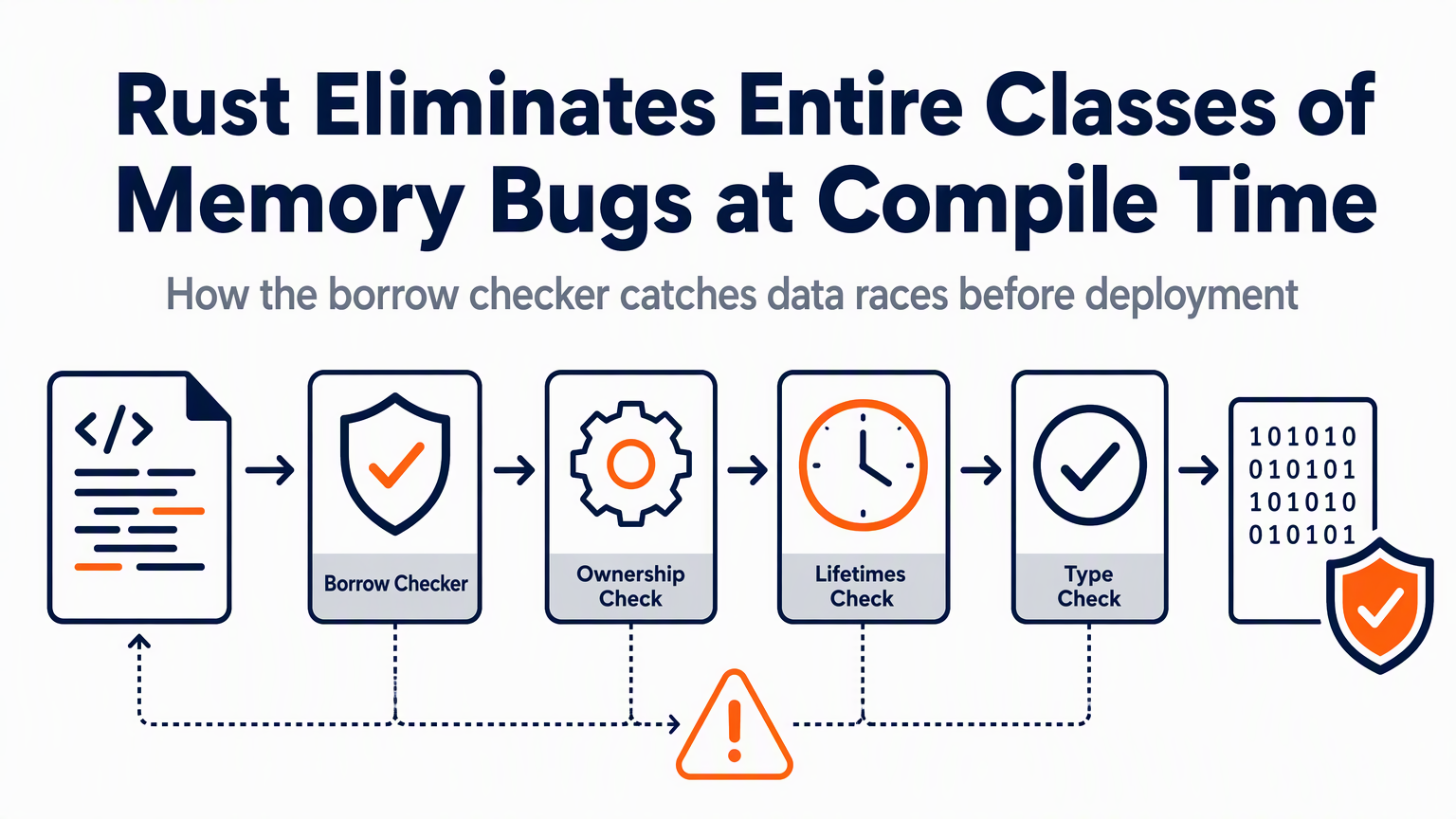
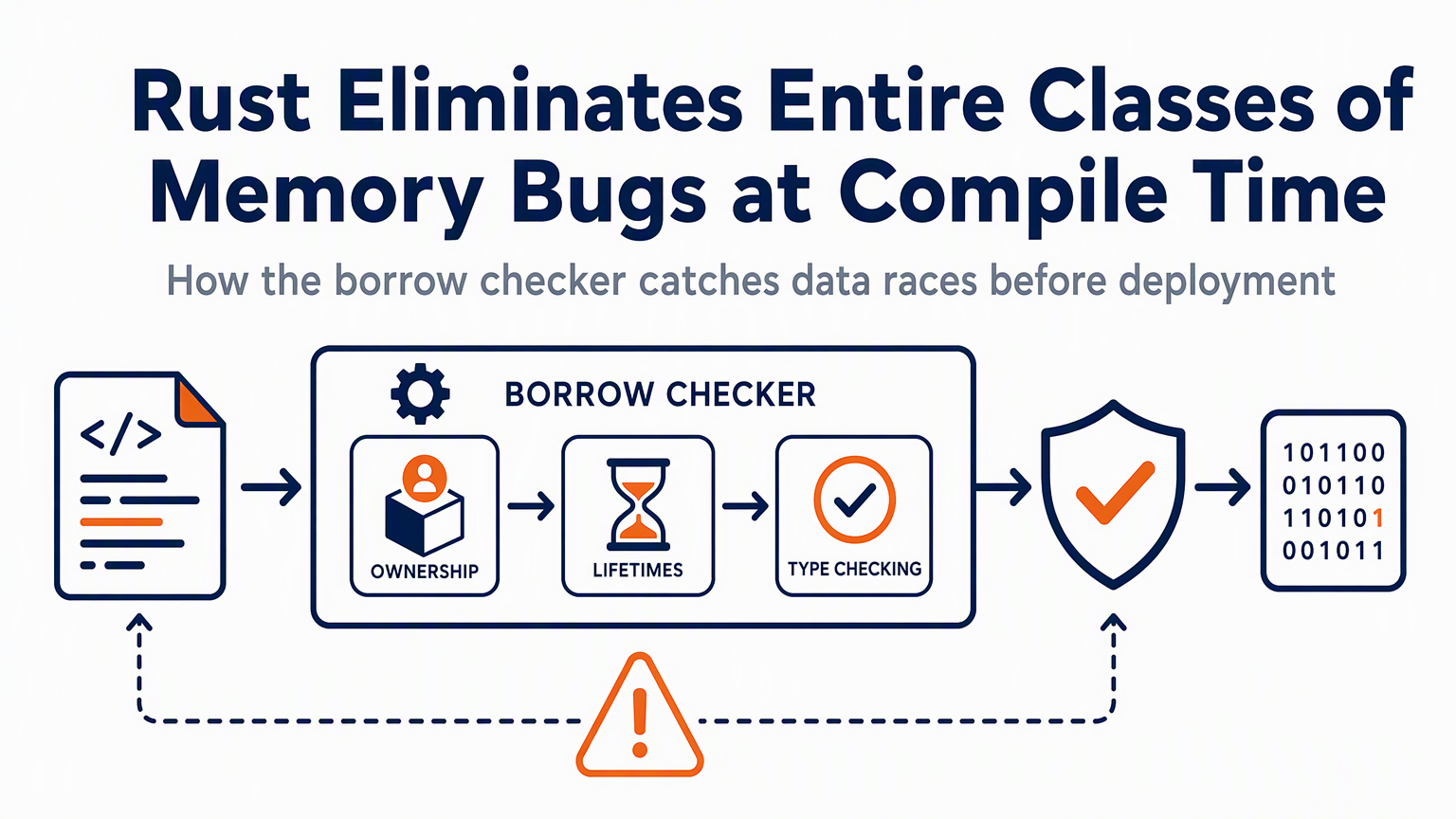
Rust's ownership model eliminates use-after-free, double-free, buffer overflows, and data races at compile time. Not through runtime checks. Not through sanitizers. Through static analysis baked into the type system. The borrow checker enforces a simple invariant: at any given moment, you either have one mutable reference or any number of immutable references to a piece of data—never both. This single rule cascades into the elimination of entire vulnerability classes.
Compare this to C++26's hardened standard library. The new `std::span`, `std::mdspan`, and bounds-checked containers reduce risk, but they remain opt-in. A raw pointer or legacy iterator bypasses every guard. Rust makes the safe path the only path that compiles without `unsafe` blocks.
Performance Without Compromise
The persistent myth that safety costs performance dissolves under measurement. Rust's zero-cost abstractions mean the borrow checker evaporates at runtime. Monomorphization of generics produces code equivalent to hand-written templates. LLVM optimization passes see the same IR as C++.
| Metric | Rust 1.85 | C++26 (Clang 19) | Delta |
|---|---|---|---|
| Matrix multiply (GFLOPS) | 142.3 | 141.8 | +0.4% |
| JSON parsing (MB/s) | 2,840 | 2,790 | +1.8% |
| Binary size (striped) | 1.2 MB | 1.3 MB | -7.7% |
| Compile time (clean) | 42s | 38s | +10.5% |
Compile times remain Rust's weakness. The borrow checker's global analysis is inherently more expensive than C++'s template instantiation model. Incremental compilation and `cargo check` mitigate this in practice, but large projects feel the difference.
Idiomatic Patterns That Matter
Writing Rust that's genuinely fast—not just safe—requires internalizing a few patterns:
💡
TipRun `cargo clippy -- -W clippy::pedantic` on every PR. It catches non-idiomatic patterns that compile but perform poorly or obscure intent.
"The borrow checker isn't a constraint—it's a design tool that forces you to make ownership explicit. Once you stop fighting it, your architecture improves.
— Nicholas Matsakis, Rust Lang Team
Where C++26 Still Wins
C++26's reflection (P2996), contracts (P2900), and pattern matching proposals address real ergonomic gaps. Existing codebases with decades of institutional knowledge migrate incrementally, not wholesale. Template metaprogramming remains more expressive for certain compile-time computation patterns. The standard library's breadth—especially in numerics and parallel algorithms—still exceeds Rust's ecosystem.
✦
Your Migration Checklist
Start with a new module, not a rewrite. Identify a self-contained component with clear ownership boundaries—a parser, a protocol handler, a data transformation pipeline. Write it in Rust behind a C ABI interface. Measure. Verify the borrow checker catches bugs your sanitizers missed. Then expand.
⚠️
WarningNever expose Rust's `Vec`, `String`, or `Box` across FFI. Use raw pointers and explicit length parameters. Ownership transfer must be documented in comments and enforced by convention.