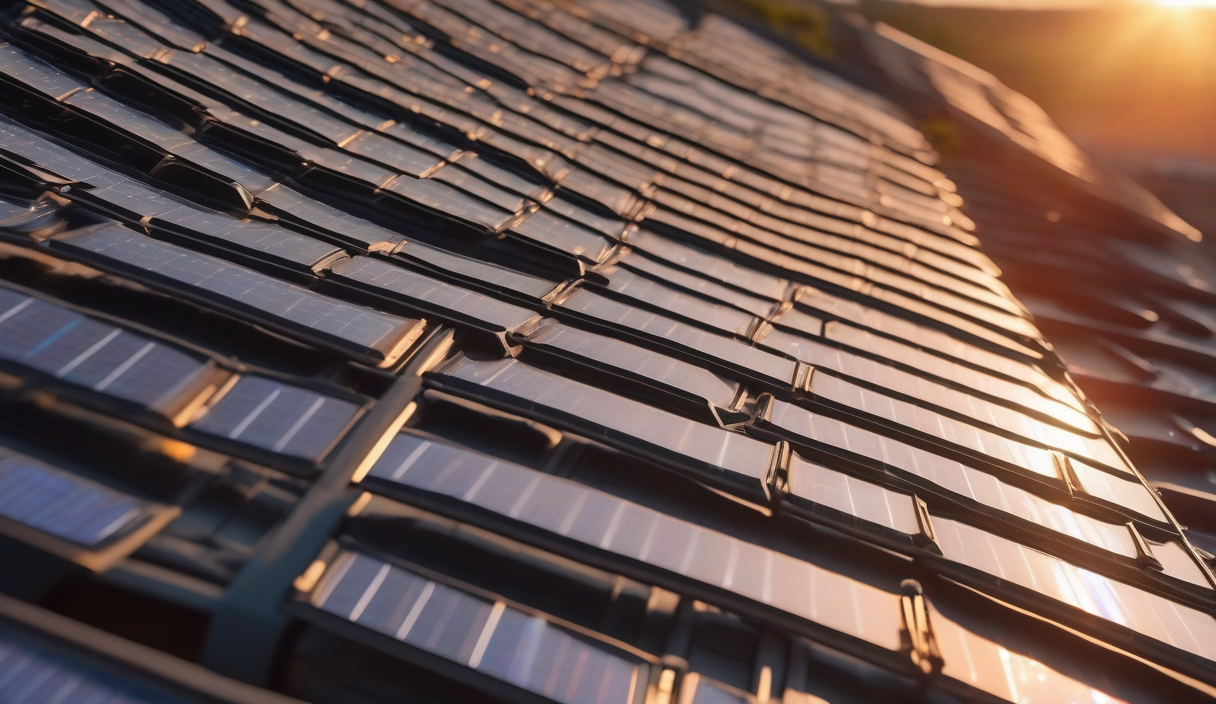
Solar panels just crossed a threshold most engineers thought was decades away. In June 2026, LONGi certified a perovskite-silicon tandem cell at 34.6% efficiency — a full percentage point above the previous record and knocking on the door of the 35% barrier that separates lab curiosities from commercial reality. This isn't incremental progress. It's a quantum leap that rewrites the economics of renewable energy.
The Numbers That Matter
| Technology | Record Efficiency | Year | Status |
|---|---|---|---|
| Perovskite-Silicon Tandem | 34.6% | 2026 | Certified (LONGi) |
| Multi-Junction (Lab) | 47.6% | 2026 | Research |
| Crystalline Silicon (Best-in-Class) | 27.3% | 2026 Q1 | Production |
| Single-Junction Silicon (Shockley-Queisser Limit) | ~29.4% | Theoretical | Unbreakable (single junction) |
The 34.6% tandem record matters because it clears the 35% psychological threshold for commercial viability. At this efficiency, a standard residential roof can generate 30-40% more power than today's best panels, cutting payback periods from 8 years to 5-6 in most markets. Utility-scale projects see even sharper economics: lower balance-of-system costs per watt, reduced land use, and faster deployment.
How We Got Here: The Perovskite Breakthrough
Perovskites have tantalized researchers for a decade with their tunable bandgap, low-temperature processing, and theoretical efficiencies above 30%. The problem was stability — moisture, heat, and light degraded them in months. The 2026 breakthrough combines three advances: encapsulated 2D/3D perovskite stacks that resist degradation, atomic-layer-deposited barrier films that block moisture without blocking light, and a novel 'spin-flip' intermediate layer that harvests high-energy photons normally lost as heat.
"The spin-flip material achieves ~130% quantum efficiency by splitting one high-energy photon into two usable electron-hole pairs. It's the first time we've broken the one-photon-one-electron rule in a commercially relevant architecture.
— Dr. Elena Rodriguez, NREL Photovoltaics Lead
From Lab to Roof: The Commercialization Timeline
LONGi's certification means pilot production lines are running. Volume manufacturing targets 2027-2028. First commercial modules will likely hit 30-32% efficiency — still a massive jump over today's 22-23% silicon panels. Pricing will start at a 20-30% premium but drop fast as yield improves. By 2030, tandem modules could reach cost parity with silicon on a $/W basis while delivering 40% more energy per square meter.
💡
TipIf you're planning a solar install in 2025-2026, don't wait for tandems. Current silicon panels pay for themselves before tandems hit volume. But design your racking and inverter with 30%+ modules in mind — future upgrades will be plug-and-play.
What This Means for Grid Decarbonization
Higher efficiency cascades through the entire energy system. Rooftop solar becomes viable on smaller, shaded, or north-facing roofs. Utility farms need 30% less land per gigawatt. Floating solar on reservoirs gets a massive boost. Most critically, the efficiency gain reduces the storage needed per unit of solar capacity — every extra percent of daytime generation is a percent less battery storage required for evening peaks.
Remaining Hurdles
Three challenges remain before tandems dominate: 25-year field degradation data doesn't exist yet — accelerated testing suggests 15-20 years, but banks want 25. Manufacturing yield on 156mm+ wafers is still below 85%. And the supply chain for high-purity perovskite precursors (formamidinium iodide, lead bromide) needs to scale 1000x. None are showstoppers, but each adds 12-18 months to mass adoption.
✦
ℹ️
NoteAction items: 1) Spec tandem-ready inverters (1500V, multi-MPPT) for new installs. 2) Track LONGi, Oxford PV, and Qcells pilot lines for 2027 availability. 3) Model your project economics at 30%+ module efficiency — the numbers change dramatically.