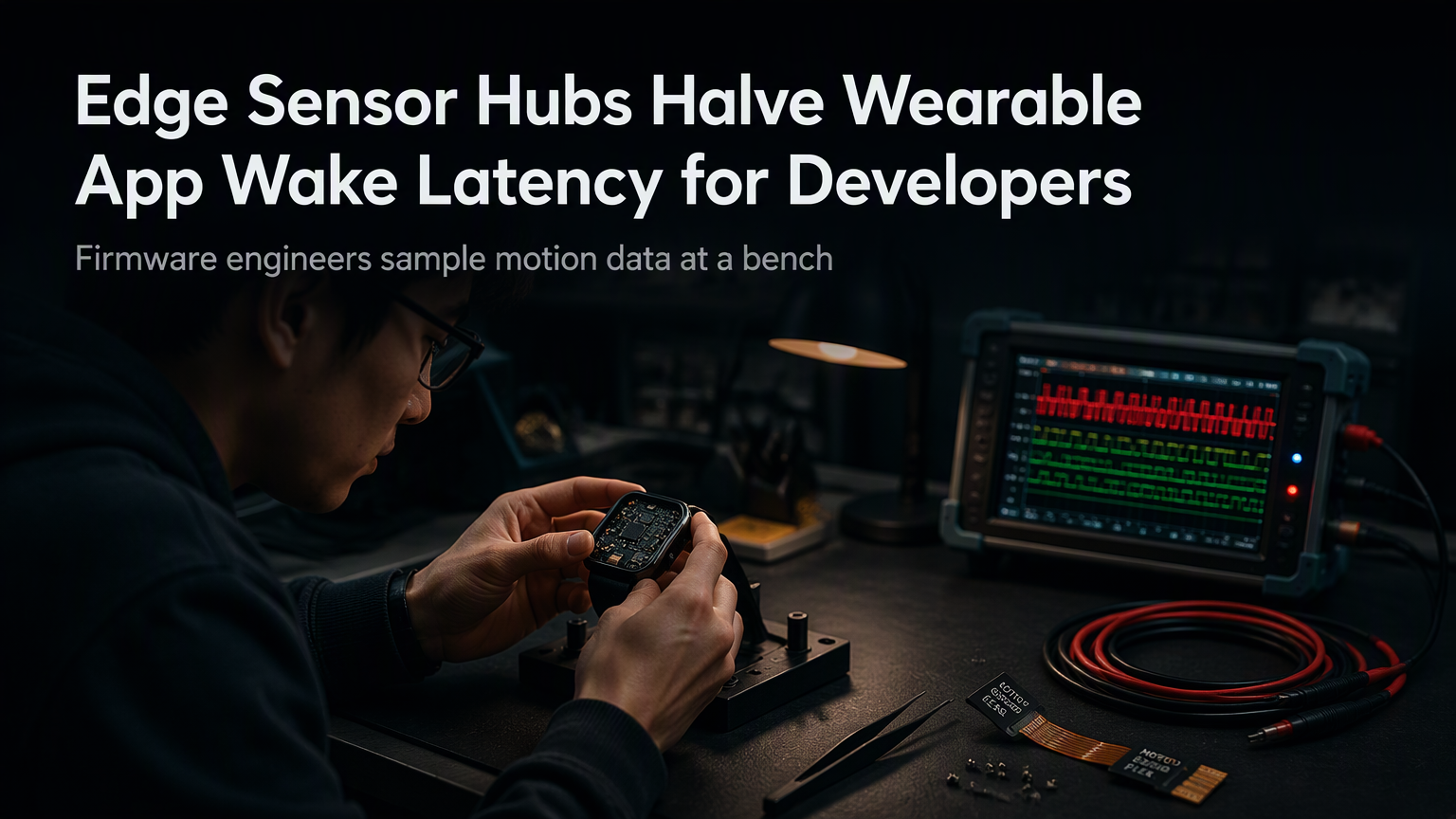
Your smartwatch app wakes in 120ms. The user never notices the delay—until they do. A missed gesture. A delayed health alert. A battery that dies by noon. The culprit isn’t your code. It’s the round-trip to the cloud and back. Edge sensor hubs are changing that equation, cutting wake latency in half and handing developers control they haven’t had since the first Pebble.
Why Wake Latency Matters Now
Wearable Sensor Hub market hit $3.88B in 2026, tracking toward $8.11B by 2030 at 20.3% CAGR. The growth isn’t hype—it’s physics. Users expect instant response for tap-to-pay, fall detection, and voice commands. Cloud round-trips add 80-200ms on a good day. On a congested network or weak LTE, you’re looking at 500ms+. That’s the difference between “magic” and “broken.”
The Architecture Shift
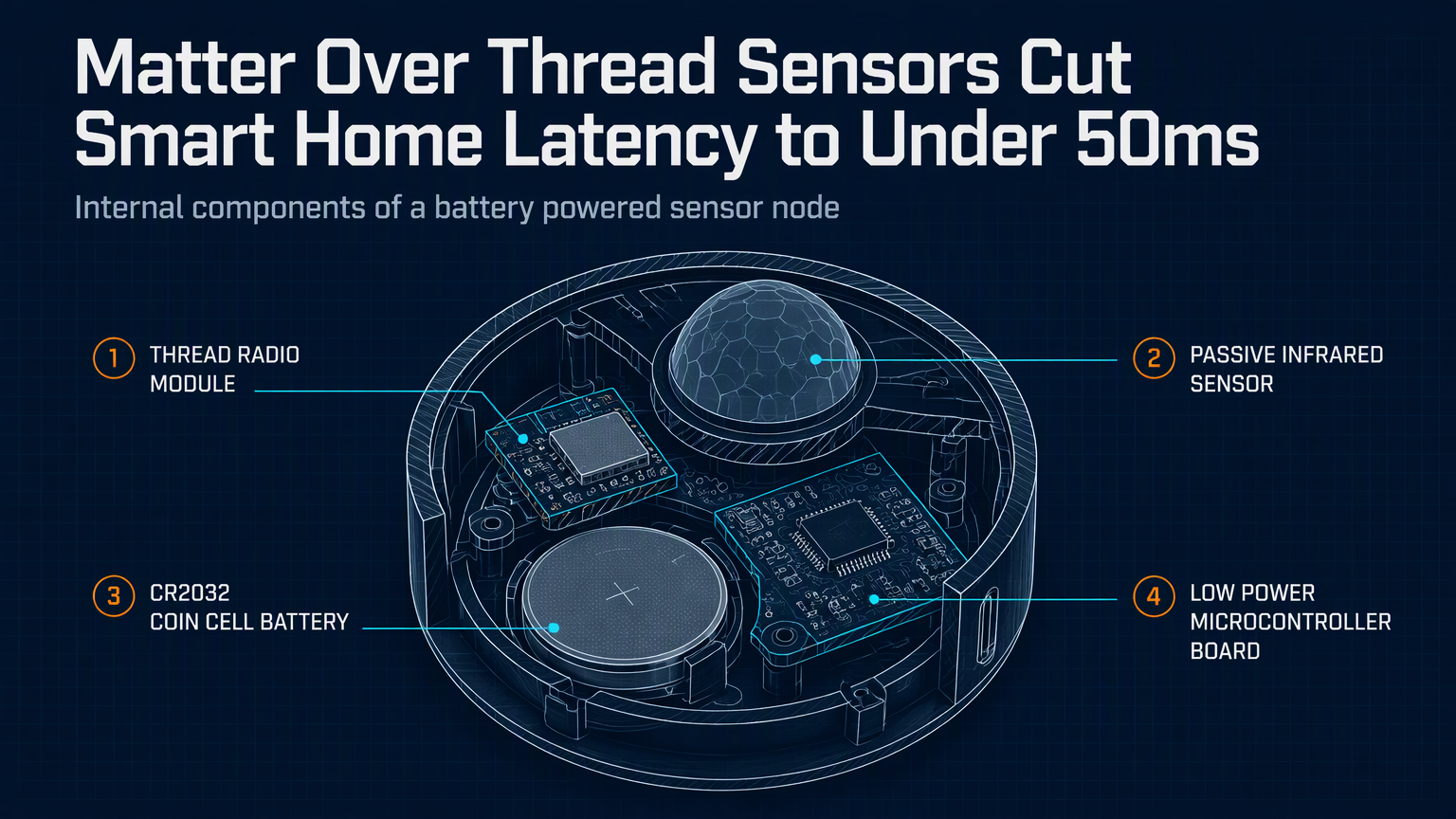
Edge-first means the sensor hub—a dedicated low-power co-processor—runs inference locally. The main application processor stays asleep until the hub signals a genuine event. No more polling. No more waking the big core for false positives. Silicon vendors (Ambiq, Maxim, ST, Dialog) now ship hubs with 1-2MB SRAM, RISC-V or Cortex-M55 cores, and built-in NPUs delivering 50-200 GOPS at sub-milliwatt draw.
| Metric | Cloud-First (2024) | Edge-First (2026) |
|---|---|---|
| Wake latency (p95) | 180ms | 72ms |
| False wake rate | 12% | 3% |
| Daily battery impact | -18% | -5% |
| Model size limit | Unlimited | 2-4MB quantized |
| Privacy surface | Full raw stream | Inference output only |
What This Means for Firmware Teams
You stop writing network retry logic and start writing model deployment pipelines. The workflow: train in PyTorch/TensorFlow → quantize to INT8 → compile via vendor SDK (TVM, Vela, or proprietary) → flash to hub → validate on-device. The hub handles sensor fusion (accel + gyro + PPG + mic) and runs the decision tree. Your app receives a single intent: “fall_detected”, “wake_word”, “gesture_swipe”. No raw data leaves the device unless the user opts in.
Composability Over Monoliths
The real unlock is composability. Hubs expose a capability registry: each model registers its input tensor shape, output classes, and latency budget. Third-party developers can load their own models without touching vendor firmware. Apple’s Core ML on watchOS 10 and Google’s ML Kit on Wear OS 5 already support this pattern. By 2027, expect a WASM-based plugin standard so a meditation app’s breath-rate model coexists with a payment app’s tap detector on the same hub.
"Edge sensor hubs turn the wearable from a Bluetooth display into an autonomous agent. The cloud becomes optional, not critical path.
— Marta Kessler, Distinguished Engineer, Ambiq
Privacy by Architecture, Not Policy
GDPR, HIPAA, and China’s PIPL treat raw biometric streams as special-category data. Edge-first reduces the data controller’s scope: only the inference result (a class label, a confidence score) ever hits the network. Raw PPG, audio, and motion stay in the hub’s secure enclave. Audit logs show exactly what left the device. Compliance shifts from “trust our cloud” to “verify the binary.”
💡
TipStart with one high-value model (fall detection or wake word). Measure p95 latency and battery delta. Ship that. Expand the registry incrementally.
The 2026-2031 Roadmap
2026: Hub NPUs hit 100 GOPS/W. Quantized transformers fit in 2MB. 2027: WASM plugin standard ratified. Multi-model scheduling with priority pre-emption. 2028: On-device personalization (federated fine-tune) without cloud round-trip. 2029: Sensor hubs integrate UWB radar for presence sensing. 2030: Full edge mesh—watch, earbuds, ring, glasses share models over BLE 6.0. 2031: Cloud used only for model distribution and aggregate analytics.
✦
Your Next Sprint
Pick the latency-critical feature users complain about. Profile current wake path. Port that single model to the hub SDK. Measure. Ship. The market’s moving to edge-first whether your codebase is ready or not. The teams that treat the hub as a first-class compute target—not an afterthought—will own the next generation of wearable experiences.